Temperature Monitoring Built For Manufacturing, Not An Office
915 MHz industrial wireless sensors that penetrate concrete walls and metal equipment. Bluetooth Thermapen probes for handheld checks. Automatic validation of every reading against your HACCP plan’s critical limits. The right protocol for each measurement point.
Bluetooth Was Designed For An Office, Not A Production Floor
Most cold chain monitoring software runs on consumer-grade 2.4 GHz Bluetooth sensors. Bluetooth is excellent for short-range plug-and-play in offices, cafes, and hospitality environments. It is not designed for the physical reality of a food manufacturing facility: thick concrete walls, refrigeration compressors, metal-clad cool rooms, electromagnetic interference from production machinery, and distances that exceed Bluetooth’s effective range.
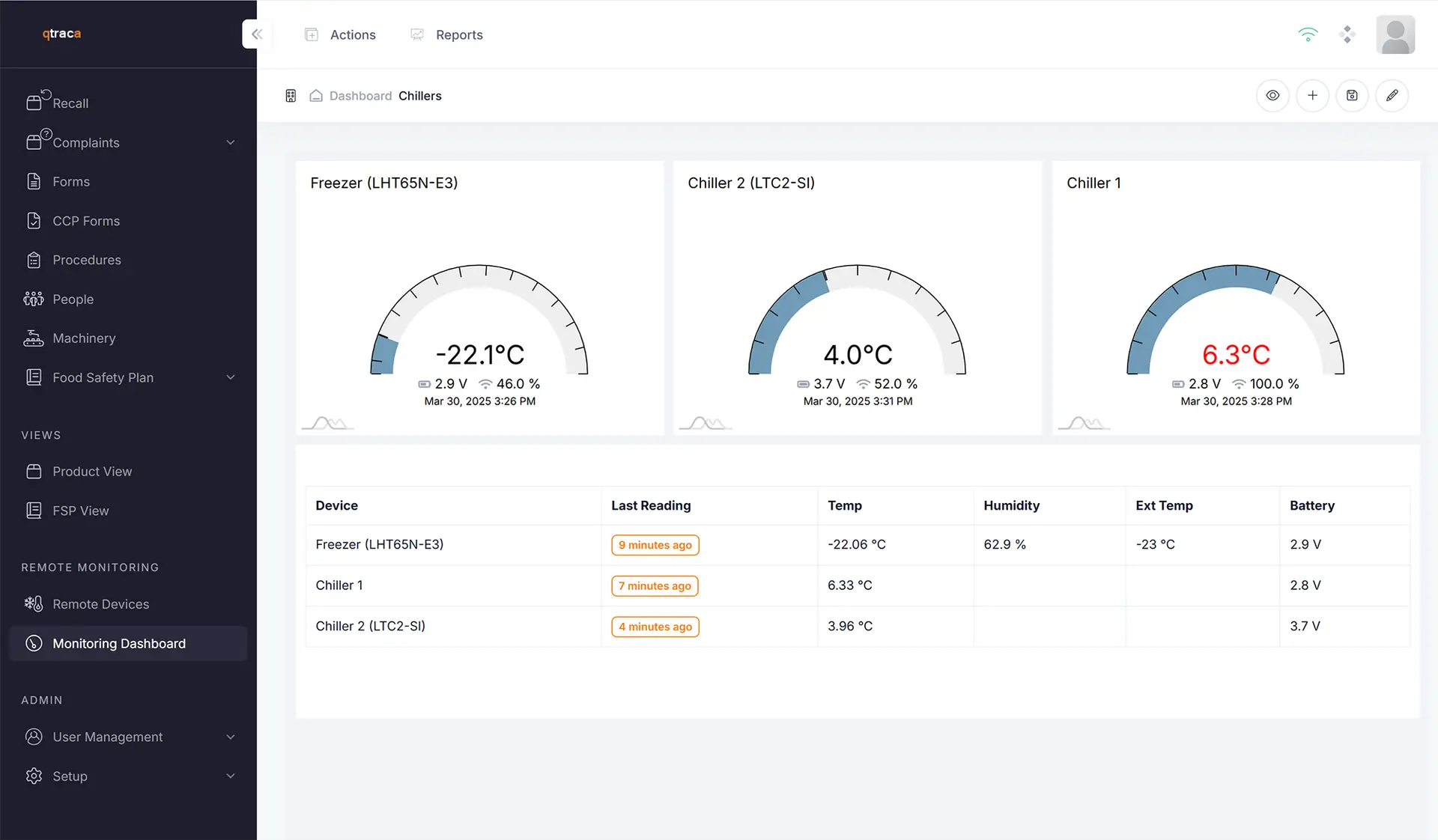
QTRACA uses 915 MHz industrial wireless sensors for continuous monitoring — the same frequency band used by industrial IoT systems precisely because of its signal penetration and range in factory environments. For handheld spot checks where short-range Bluetooth is perfectly appropriate, QTRACA integrates with Bluetooth Thermapen probes. The right protocol for each measurement point: 915 MHz for ambient continuous monitoring, Bluetooth for handheld checks.
The trade-off is real and well-known in industrial IoT: 2.4 GHz Bluetooth offers higher data rates and seamless interoperability with consumer devices for short-range use. 915 MHz delivers significantly better range, penetration, and reliability through industrial structures and around heavy machinery. For a food manufacturer, the right answer is to use both for what each does best.
Continuous Monitoring, Automatic Validation, Tamper-Evident Records
Wireless Sensors Engineered For Food Manufacturing
The QTRACA 915 MHz industrial wireless sensor network is designed to deliver reliable continuous data in conditions where Bluetooth and Wi-Fi fall over: through concrete walls and refrigeration unit insulation, across the radius of a production floor, and around the electromagnetic noise of heavy machinery.
- 915 MHz industrial band — the protocol of choice for industrial IoT
- Signal penetration through concrete walls and metal equipment
- Battery life measured in years, not weeks
- Temperature range covers freezers down to -30 degrees C and hot holding
- Combined temperature and humidity sensors where moisture control matters
Handheld Spot Checks Straight Into Forms
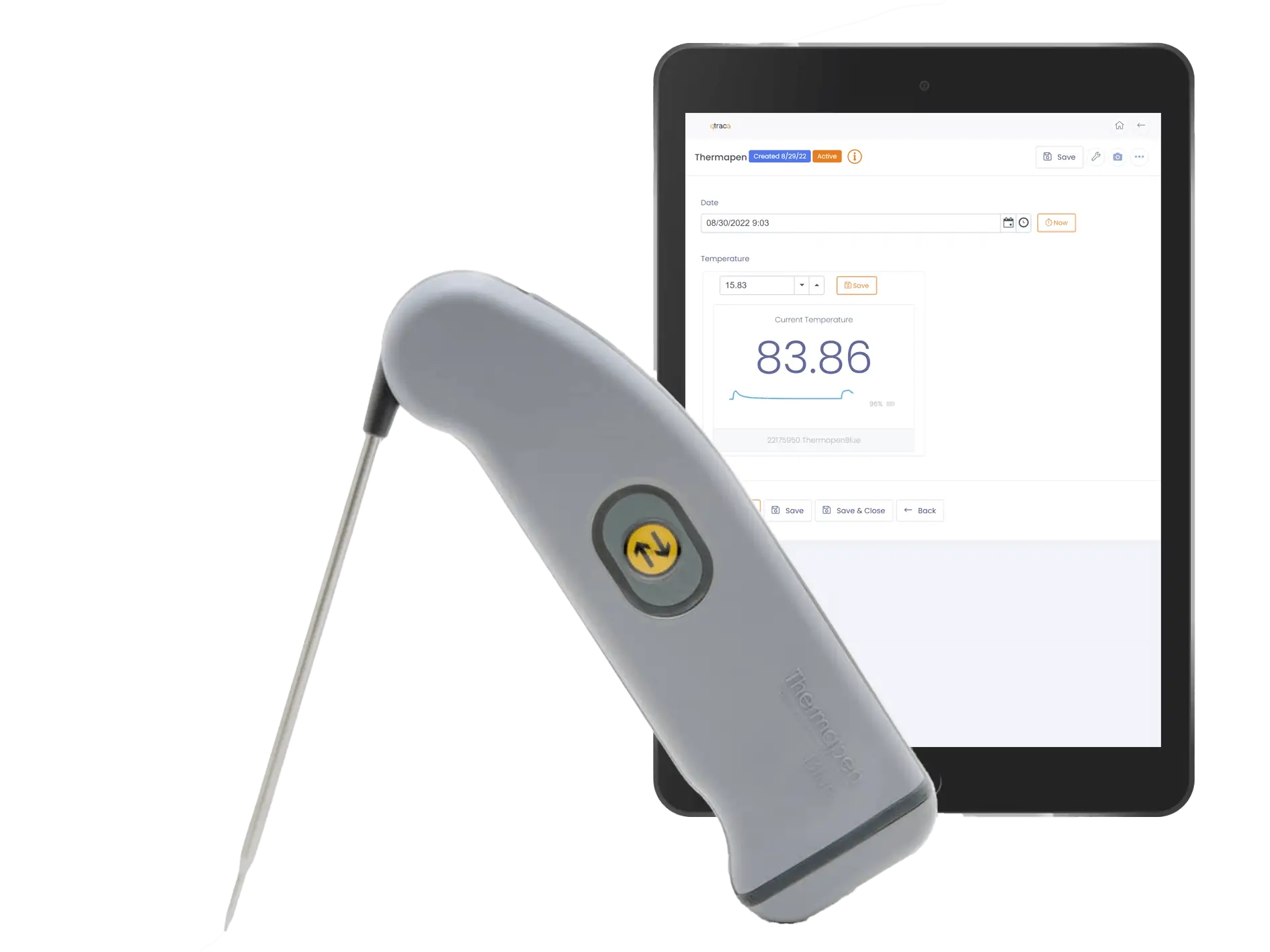
For handheld temperature checks — receiving inspections, cooking temperatures, in-process spot checks — QTRACA integrates directly with the Thermapen range of Bluetooth probes. Probe readings flow straight into the relevant form, eliminating manual transcription and the human errors that come with it.
- Thermapen Bluetooth probes pair directly with QTRACA forms
- Plug-and-play probe-to-form workflow for handheld checks
- Probe readings auto-validated against CCP critical limits
- Eliminates transcription errors from manual data entry
- Probe identifier captured automatically for audit trail
Automatic CCP Validation Against Time-Temperature Profiles
For manufactured products where cook and cool cycles are critical control points — meat, dairy, ready meals, prepared foods — the time-temperature profile is what matters, not a single point reading. QTRACA streams continuous sensor data into HACCP forms as a graphed curve, with automatic validation against the CCP limits defined in your plan.
- Continuous cook and cool curves auto-recorded into forms
- Time-temperature profiles validated against HACCP CCP limits
- Cool curves checked against requirements like 60 degrees C to 21 degrees C drop windows
- Deviations flagged in real time, not discovered at audit
- Curve graphs included in HACCP verification reports
Catch Excursions When They Happen
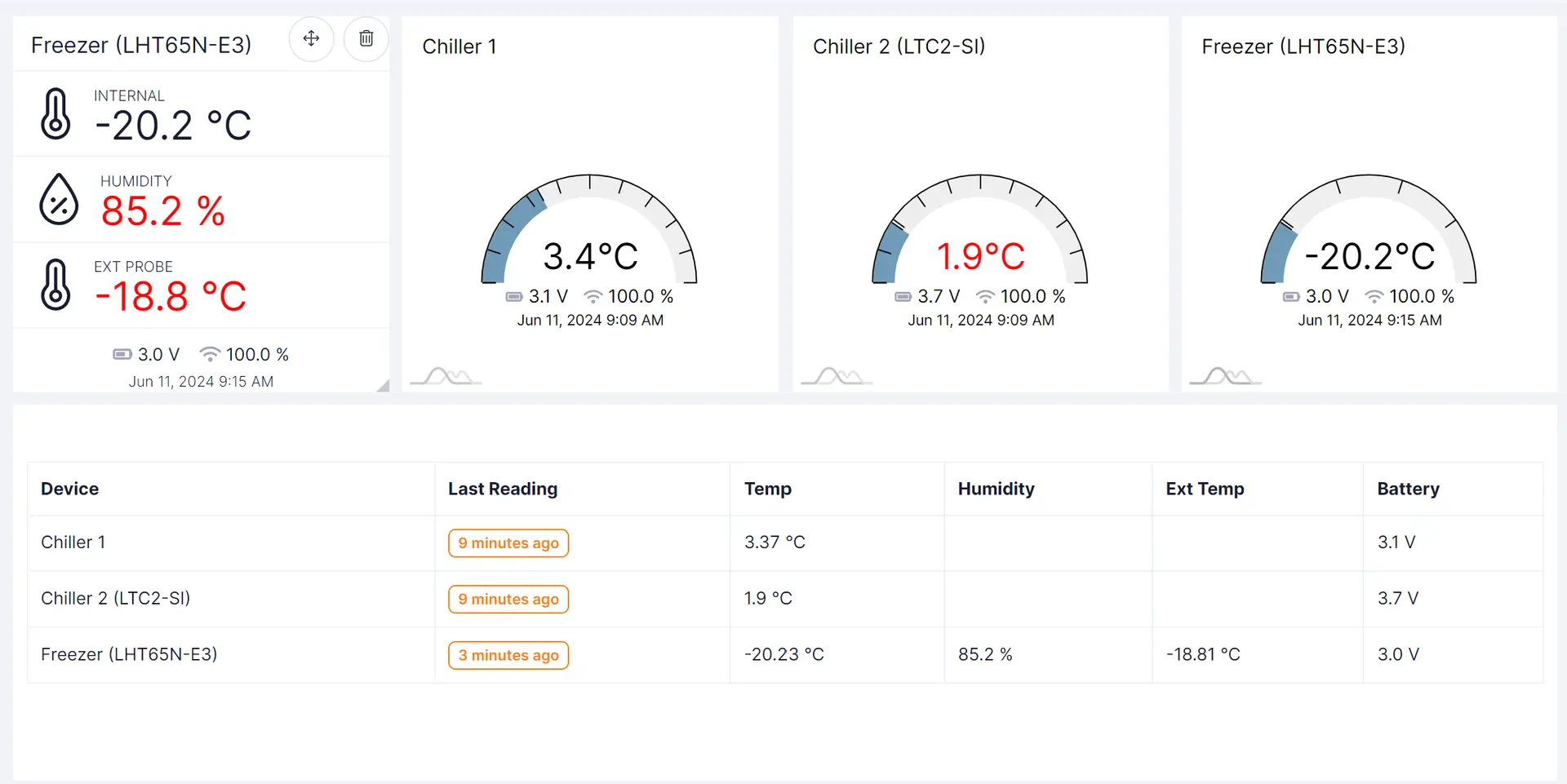
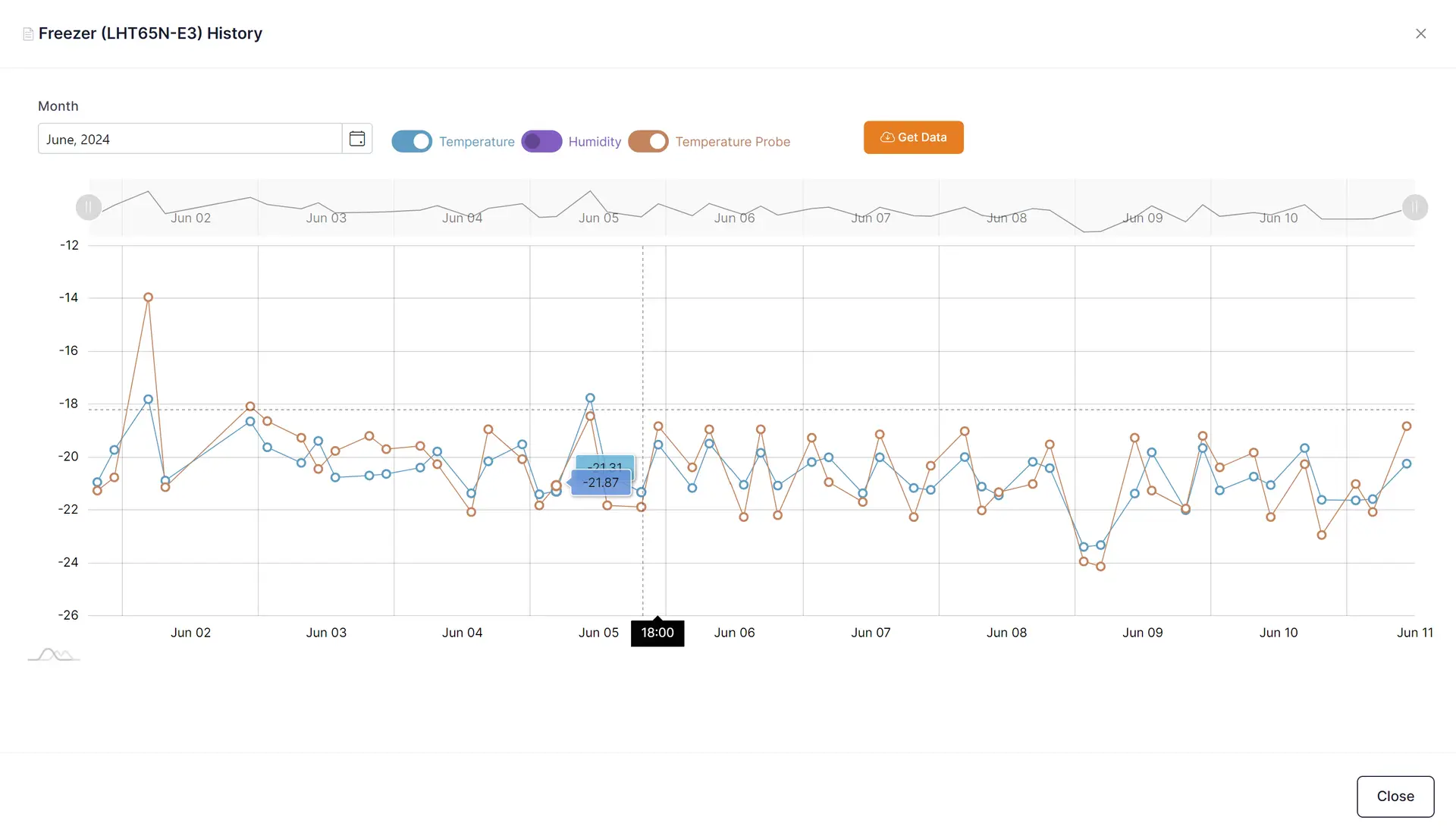
A freezer that drifts above -18 degrees C on a Saturday night should not be discovered on Monday morning when a staff member opens the door. QTRACA monitors every sensor continuously and triggers alerts the moment a reading breaches its critical limit, with notification routing to the right people.
- 24/7 monitoring with sub-minute alert resolution
- Alerts routed via app push, email, and SMS
- Escalation chains: if the first responder does not acknowledge, escalate
- Alert acknowledgement and corrective action captured automatically
- Configurable thresholds, time-above-limit logic, and excursion duration tracking
Tamper-Evident Records From Sensor To Audit
Sensor records have to defend themselves in two settings: an FDA or MPI audit, and a customer complaint investigation. QTRACA records are write-once, timestamped, and linked to calibration history — the structure that auditors and regulators expect. Calibration management is built in, not an afterthought.
- Write-once sensor records, no editing or deletion
- Built-in 2-point and 3-point calibration management
- Correction factors applied automatically from calibration data
- Calibration certificates stored and version-controlled
- Sensor downtime gaps recorded transparently for audit defence
How QTRACA Changes Daily Temperature Monitoring
For a food manufacturer with QTRACA cold chain monitoring in place, daily temperature work shifts in three ways:
Manual temperature rounds disappear
Staff who used to walk the facility three times a day with a clipboard now spend that time on actual quality work. The records are stronger (every 5 minutes instead of every 4 hours), not weaker.
Excursions get caught in minutes
A freezer drifting on a Saturday night triggers an alert; the on-call staff member responds; the corrective action is documented before any product is at risk. The alternative — discovering the excursion on Monday — is what destroys product and triggers recalls.
Audit prep becomes filtering, not reconstruction
The auditor asks for temperature records for a specific cool room for a specific date range. You filter and export the graph in five minutes. Sensor calibration records are right next to the readings they correct.
For most QTRACA customers, the temperature monitoring system pays for itself the first time it catches a refrigeration failure overnight that would have ruined a production run.
QTRACA Cold Chain Monitoring FAQ
See QTRACA Sensors In A Real Manufacturing Environment
Book a 30-minute walkthrough, or start a 15-day free trial with full feature access. No credit card required.
More From the QTRACA Blog
Summer's Silent Threat: How Temperature Failures Fuel Food Safety Disasters
Heat stress on cold chain management drives seasonal spikes in food safety incidents. What to monitor and how.
Read article →From Pasta to Peaches: The Listeria Wake-Up Call
Listeria contamination across pasta, cheese, chicken and peaches in 2025. The five prevention priorities.
Read article →