Be Ready For The FDA Food Traceability Rule
FSMA 204 requires electronic records of Critical Tracking Events and Key Data Elements for foods on the FDA Food Traceability List — producible within 24 hours of an FDA request. QTRACA captures the CTEs and KDEs as part of normal operations, so the 24-hour window is never a panic.

Why FSMA 204 Catches Manufacturers Off Guard
FSMA 204 is not a software upgrade. It is a fundamental change in how the FDA expects food businesses to record traceability data. Under the previous Section 414 framework, you needed records of one step forward and one step back in the supply chain — usually paper invoices, bills of lading, and shipping records. Under FSMA 204, you need structured electronic records of specific Critical Tracking Events with specific Key Data Elements, producible within 24 hours when the FDA asks.
The compliance deadline for most covered entities is January 20, 2026. Foods on the Food Traceability List include fresh produce, soft cheeses, shell eggs, certain seafood, nut butters, and ready-to-eat salads. If you manufacture, process, pack, or hold any of these, the question is not whether you need FSMA 204 readiness — it is whether your current systems can produce the records when asked.
QTRACA was designed with traceability as a first-class concept, not a bolt-on. CTEs are captured as part of normal operations. KDEs populate themselves from supplier receipts, batch records, recipe data, and customer shipments. When the FDA requests records, the question becomes "what date range and what lot" rather than "where did we put those records."
Every CTE And KDE Captured As Part Of Daily Operations
Capture Every CTE In Your Operation
FSMA 204 defines seven Critical Tracking Events that cover the supply chain: harvesting, cooling, initial packing, first land-based receiving (for foods of seafood-related origin), shipping, receiving, and transformation. QTRACA captures the CTEs that apply to your operation as structured data with the required KDEs attached to each.
- Receiving CTEs from suppliers with supplier KDEs auto-populated
- Transformation CTEs at each production batch
- Shipping CTEs to customers with destination KDEs
- Cross-references between CTEs to maintain the chain
- Audit trail showing who recorded what, when, and from which device

Assign And Track TLCs Automatically
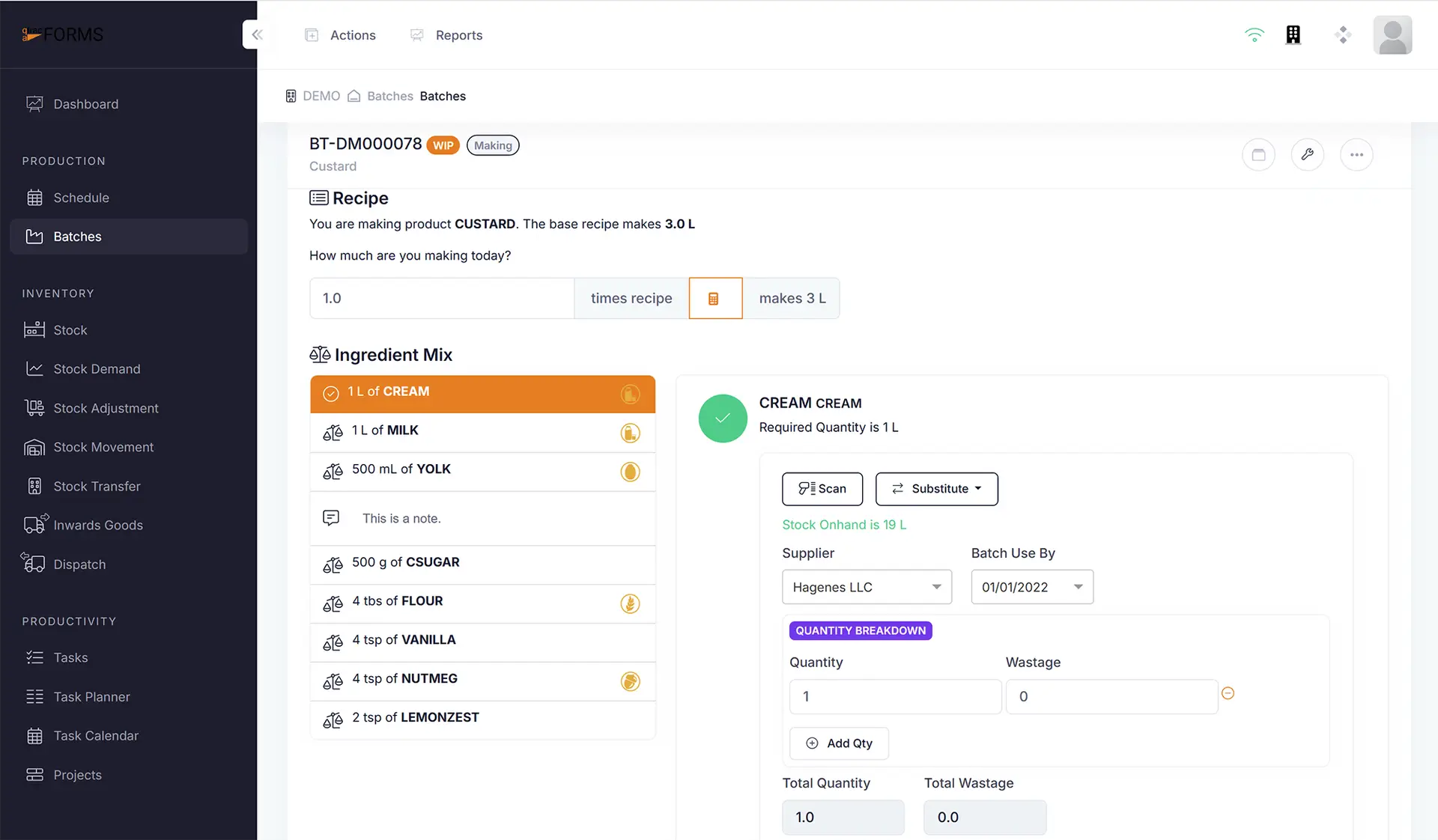
The Traceability Lot Code (TLC) is the spine of FSMA 204 — the unique identifier that links upstream and downstream KDEs through every CTE. QTRACA assigns TLCs at the appropriate CTEs (initial packing, first land-based receiving, transformation) and maintains the full lot genealogy automatically.
- Automatic TLC assignment at transformation CTEs
- Manual TLC entry where supplier-assigned codes apply
- Forward and backward traceability through TLCs in seconds
- Lot genealogy visualisation: ingredient lots → batches → finished goods
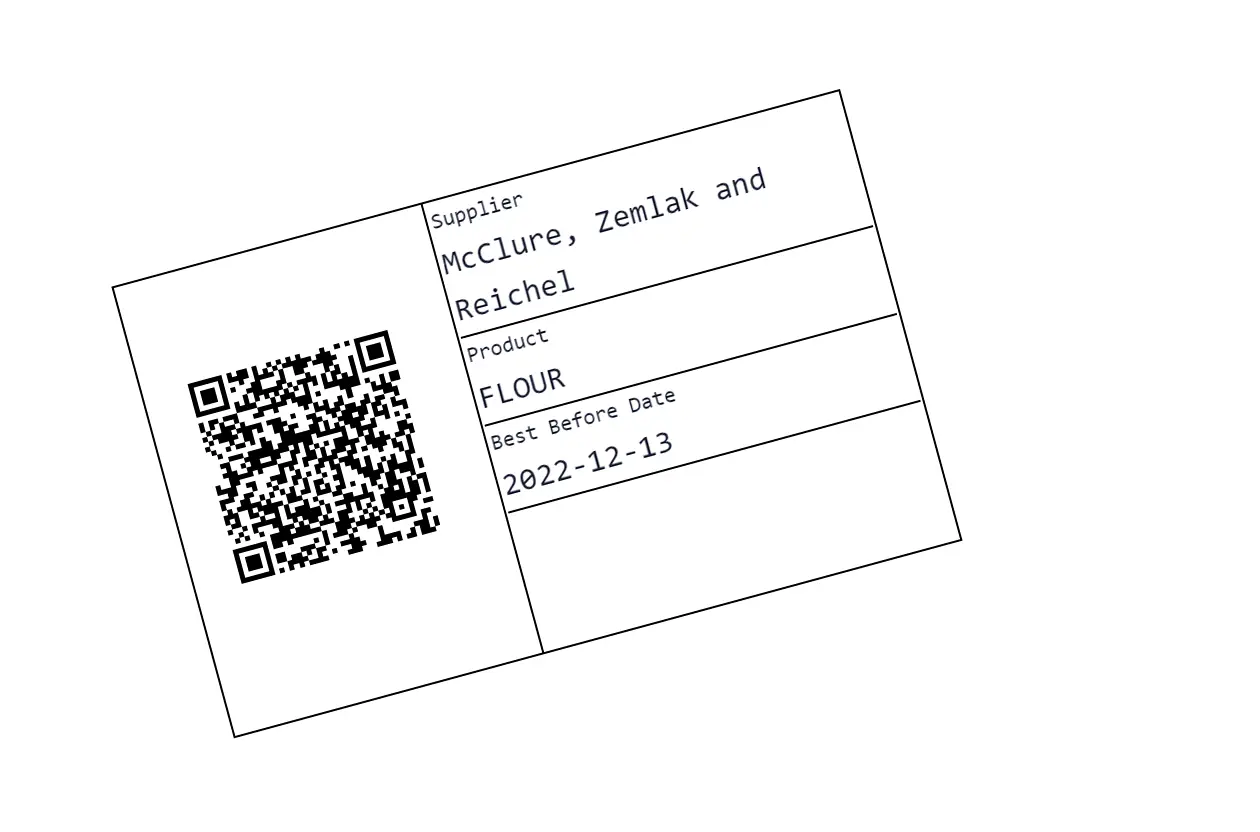
- Barcode and label printing aligned to TLC format
Produce Sortable Electronic Records On Demand
FSMA 204 requires covered businesses to produce traceability records electronically within 24 hours of an FDA request — in a sortable spreadsheet format the FDA may specify. The deadline assumes you have the records; the work is producing them. QTRACA exports the FDA-formatted spreadsheet from structured data captured during normal operations.
- Sortable electronic spreadsheet export in FDA-specified format
- Filter by date range, lot, product, or supplier
- All KDEs populated automatically from structured records
- 24-hour window becomes 5 minutes of filtering and export
- Audit trail of every record request and export
Capture Supplier KDEs On Every Receipt
FSMA 204 places significant data requirements on the receiving end of every ingredient: supplier traceability lot code, point of contact, product description, quantity and unit of measure, location identifier, and date. QTRACA captures these KDEs at supplier receipt and links them to every downstream batch and finished good that uses the ingredient.
- Supplier KDEs captured at every receiving CTE
- Supplier traceability lot codes recorded and indexed
- Supplier compliance documents stored and version-controlled
- Linkage from supplier lot to every finished product made from it
- Allergen, organic, and certification data captured alongside KDEs
From FSMA 204 Records To Recall In Minutes
FSMA 204 traceability is not just about FDA inspections — it is what makes a fast, targeted recall possible. When a supplier issues a recall on a specific lot, QTRACA identifies every finished good made from that lot, every customer who received those finished goods, and every CTE in between. The 24-hour FDA window is the floor; the practical capability is far faster.
- One-click recall query: affected lot → finished goods → customers
- Customer notification list generated from shipping records
- Mock recall capability for FSMA 204 verification
- Recall effectiveness records for the FDA and your retail customers
- Targeted recall scope reduces waste and protects brand
One Platform For MPI, FSANZ, And FSMA 204
Food manufacturers in Australia and New Zealand that export to the US face dual compliance: domestic frameworks (MPI Risk Management Programme, FSANZ requirements, PEAL labelling) plus FSMA 204 for FTL foods entering the US market. QTRACA was built in NZ and serves AU/NZ/US, so one platform covers both sides of the compliance equation.
- FSMA 204 CTE/KDE capture for FTL foods exported to the US
- MPI Risk Management Programme records and verification workflows
- FSANZ-aligned food safety and labelling requirements
- PEAL allergen labelling for AU/NZ products
- Export documentation and certification linked to traceability data
How QTRACA Changes The FSMA 204 Workload
For a food manufacturer running QTRACA, FSMA 204 readiness is not a project — it is a side effect of running operations through the platform:
CTEs and KDEs are captured during normal operations
Receiving an ingredient is a receiving CTE. Running a production batch is a transformation CTE. Shipping a customer order is a shipping CTE. The KDEs populate themselves from supplier records, batch records, and shipping documents.
The 24-hour FDA window stops being a deadline
When the FDA asks for records, you filter by lot and date range, export the sortable spreadsheet, and you are done in under an hour.
Recalls become targeted and fast
The FSMA 204 records that satisfy the FDA are the same records that let you identify exactly which finished goods are affected by a supplier recall — reducing recall scope, protecting brand, and limiting financial impact.
The January 2026 deadline arrives in either case. The choice is whether your operation has structured electronic records on the day the FDA asks, or whether you are reconstructing paper records under 24-hour pressure.
QTRACA FSMA 204 Software FAQ
Don't Wait For The 24-Hour FDA Window To Find Out
Book a 30-minute walkthrough, or start a 15-day free trial with full feature access. No credit card required.
More From the QTRACA Blog
The FDA Traceability Extension: Why Waiting Until 2028 Is a Dangerous Gamble
FDA extended the Food Traceability Rule compliance date to 2028 — here's why waiting is a dangerous gamble.
Read article →Why Smart Food Manufacturers Aren't Waiting for the FDA Traceability Deadline
The data shows why proactive manufacturers are implementing FSMA 204 capability now rather than waiting for 2028.
Read article →